


When it comes to choosing a water bottle, one of the common concerns is the fragility of the material. Glass and ceramic are both popular choices for water bottles, each with their own unique characteristics. As a supplier of glass water bottles, I often get asked the question: Are glass water bottles more fragile than ceramic ones? In this blog post, I'll explore this topic in depth, drawing on scientific knowledge and practical experience to provide you with a comprehensive answer.

The Physical Properties of Glass and Ceramic
To understand the fragility of glass and ceramic water bottles, we first need to look at their physical properties. Glass is an amorphous solid, which means its atoms are arranged in a disordered manner. This structure gives glass its transparency and smooth surface. Most glass water bottles are made from soda - lime glass or borosilicate glass. Soda - lime glass is the more common type, used in many household glass items. It is relatively inexpensive to produce but has a lower resistance to thermal shock. Borosilicate glass, on the other hand, contains boron trioxide, which gives it a much higher resistance to thermal changes.
Ceramics, on the other hand, are made from inorganic, non - metallic materials, usually clay, which are fired at high temperatures. The firing process causes the clay particles to bond together, creating a hard and porous material. Ceramics can have a wide range of properties depending on the type of clay used, the firing temperature, and any additional treatments. Some ceramics are very dense and strong, while others are more porous and brittle.
Factors Affecting Fragility
Impact Resistance
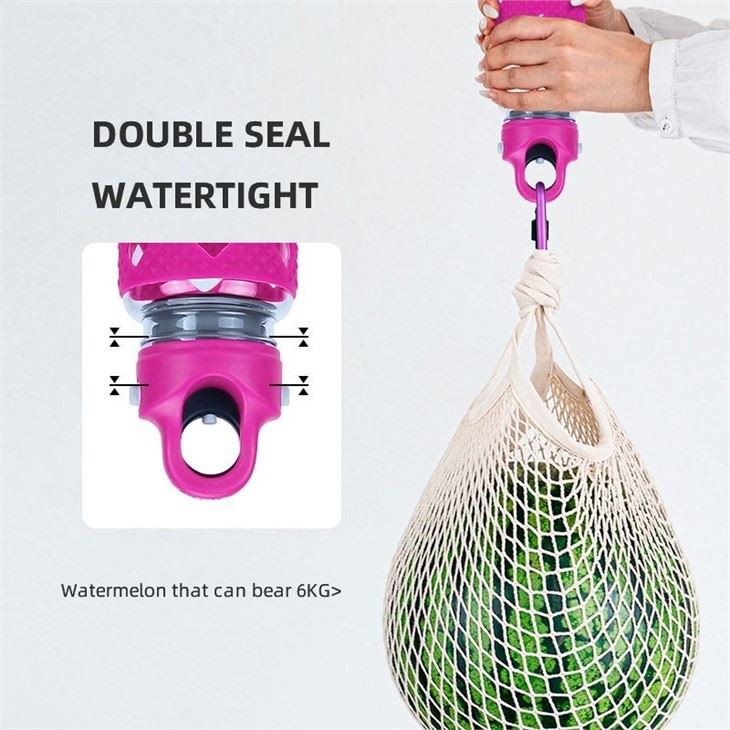
One of the main factors contributing to the perception of fragility is impact resistance. When a water bottle is dropped or knocked, it experiences an impact force. Glass, in general, is more brittle than ceramic. A sudden impact can cause the glass to crack or shatter because it lacks the ability to deform and absorb the energy from the impact. However, this is not always the case. For example, our Unbreakable Glass Water Bottle is designed with special technology to enhance its impact resistance. It can withstand a certain degree of impact without breaking, making it a more durable option than traditional glass water bottles.
Ceramic water bottles also have their own limitations in terms of impact resistance. Although they are less likely to shatter into small pieces like glass, they can still crack or chip when subjected to a strong impact. The internal structure of ceramics can be weakened by small flaws or air bubbles, which can act as stress concentrators and lead to cracking under impact.
Thermal Shock Resistance
Thermal shock occurs when a material experiences a rapid change in temperature. This can happen when you pour hot water into a cold bottle or vice versa. Glass has different thermal shock resistance depending on its type. Soda - lime glass is more prone to thermal shock because it expands and contracts significantly with temperature changes. This can cause internal stresses that lead to cracking. Borosilicate glass, with its lower coefficient of thermal expansion, is much more resistant to thermal shock. Our Twist - free Borosilicate Glass Water Bottle is made from high - quality borosilicate glass, which can handle sudden temperature changes without cracking.
Ceramics also vary in their thermal shock resistance. Some ceramics with a high porosity can be more resistant to thermal shock because the pores can act as buffers for thermal expansion. However, dense and non - porous ceramics are more likely to crack under thermal shock.
Chemical Resistance
Both glass and ceramic are generally resistant to chemical corrosion, which is an important factor in the long - term durability of a water bottle. Glass is inert and does not react with most substances, making it a great choice for storing water and other beverages. Ceramics can also be very resistant to chemicals, but some glazes used on ceramic water bottles may be prone to chemical attack over time.
Design Features to Enhance Durability
In addition to the material properties, the design of the water bottle can also play a significant role in its durability. For glass water bottles, we often use protective sleeves to reduce the risk of breakage. Our 16oz Glass Water Bottle with Silicone Sleeve is a great example. The silicone sleeve provides a cushioning effect, absorbing the impact energy when the bottle is dropped or bumped. It also makes the bottle easier to grip, reducing the chances of it slipping out of your hand.
Ceramic water bottles can also have design features to enhance their durability. Some ceramic bottles are designed with a thicker wall to increase their strength. Others may have a reinforced base or a special shape that distributes stress more evenly.
Practical Considerations
When choosing between a glass and a ceramic water bottle, practical considerations also come into play. Glass water bottles are often preferred for their transparency, which allows you to easily see the level of water inside. They are also easy to clean and do not retain flavors or odors. Ceramic water bottles, on the other hand, have a more rustic and natural look, which can be appealing to some consumers. They can also provide better insulation in some cases, keeping your water cooler for longer.
Conclusion
So, are glass water bottles more fragile than ceramic ones? The answer is not straightforward. While glass is generally more brittle and prone to shattering under impact, modern glass water bottles can be designed with features to enhance their durability. Our range of glass water bottles, such as the Unbreakable Glass Water Bottle, Twist - free Borosilicate Glass Water Bottle, and 16oz Glass Water Bottle with Silicone Sleeve, offer a combination of style, functionality, and durability.
Ceramic water bottles also have their own strengths and weaknesses in terms of fragility. They are less likely to shatter into small pieces but can still crack or chip under impact. Their thermal shock resistance varies depending on the type of ceramic.
If you are interested in our glass water bottles and would like to discuss potential purchasing opportunities, please feel free to reach out. We are always happy to provide more information and work with you to meet your specific needs.
References
- "Materials Science and Engineering: An Introduction" by William D. Callister Jr. and David G. Rethwisch
- "Ceramics: Structure, Properties, Processing, and Applications" by J. Reed
- Industry research reports on glass and ceramic products
